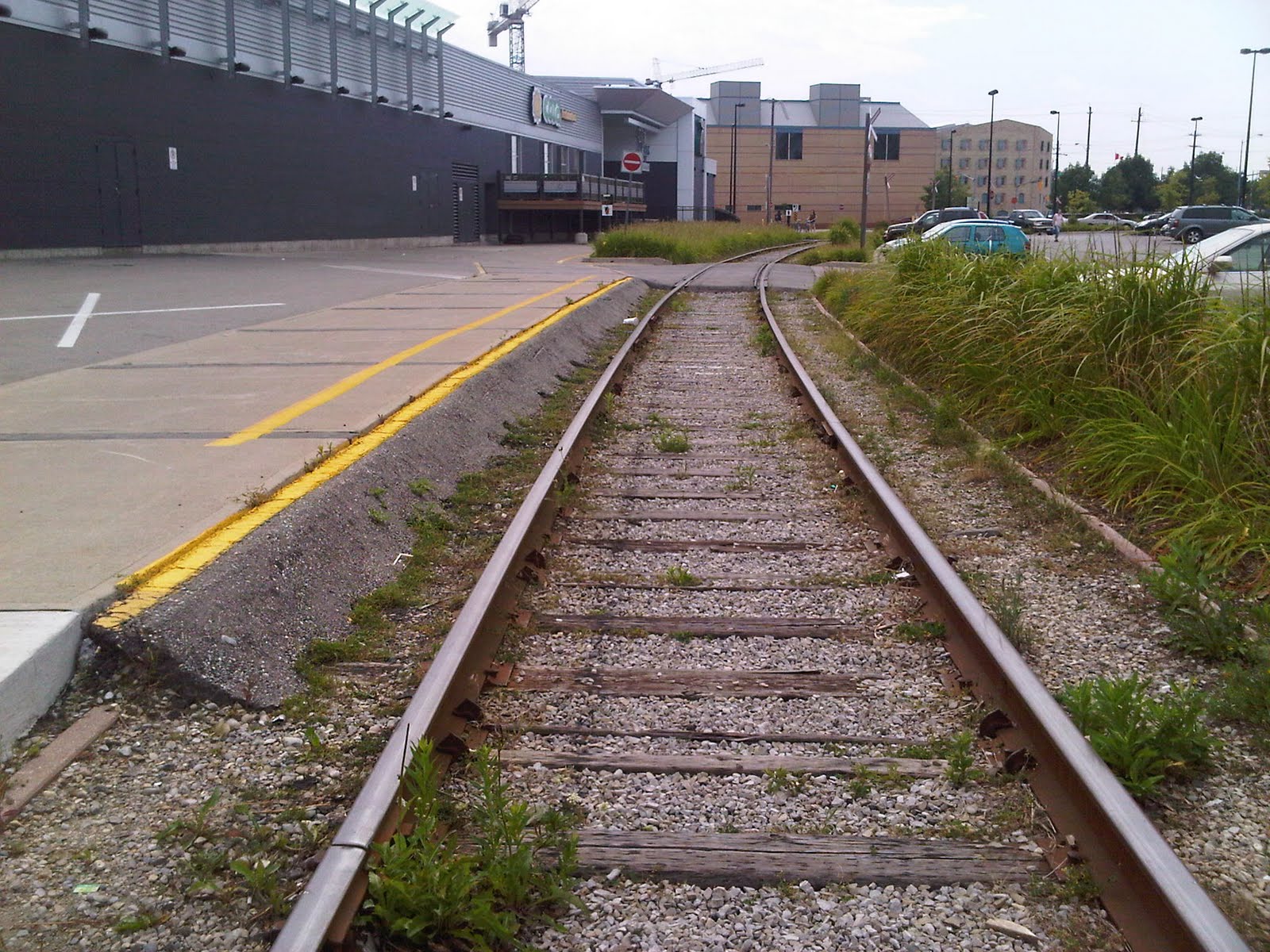
Friday, October 22, 2010

We need other mass transit solutions

My column in the Saturday, October 23, Waterloo Region Record (link)

No: We need other mass transit solutions
Ruth Haworth

If the Great Light Rail Transit Debate has done nothing else, it has got our community talking about transit. In fact, transit may well be the issue of this election campaign.

In a recent election survey by Taxpayers for Sensible Transit (www.t4st.com), 95 per cent of responding candidates said they oppose Waterloo Region’s light rail transit proposal. It seems likely that the new regional council will vote against light rail transit and that will be the end of it.

But the survey had another, even more extreme result: over 99 per cent of candidates responded that we need to improve transit in the region.

If we’re smart, we’ll take what we’ve learned from the light rail transit proposal and debate, and use it to create a better transit plan that will serve our community into the future. I’ll take a stab at taking the arguments on both sides of the issue to see what they can tell us.

The main argument against light rail transit is that it’s unaffordable. The cost to Waterloo Region of well over $200 million is simply too much for local taxpayers to absorb — and typical cost overruns could make that burden much larger. There have also been criticisms that the service is too inconvenient. The long distance between stops means that riders would have to walk further and make more transfers. The distance from light rail stops to nearby attractions, notably from proposed light rail stops to the malls, also means that light rail transit would be less convenient than buses. And the inconvenience of light rail is not offset by any advantages in speed. Light rail transit, running on busy city streets and stopping at all traffic lights, is virtually no faster than what we have now.

By contrast, there’s a lot of room for improvement in our existing bus service, at much lower cost. If we want to woo people out of their cars and on to transit, the total transit experience must become more convenient. That means that the total time of trips is faster, with less transfers and more predictable schedules. We need more bus shelters and better snow clearance around them. And so on.

Another complaint about light rail transit is that it could cause major traffic disruption with plans such as railway gates on Erb Street in Uptown Waterloo. Transit should be integrated with, and respectful of, other uses of roads, including cars, bikes and pedestrians.

The region’s “Plan B” is rapid buses. The rapid bus proposal, which is to build dedicated bus lanes (with curbs) on a route similar to light rail transit, is almost as problematic as light rail. Like light rail transit, bus rapid transit isn’t rapid. The rapid buses are expected to travel at about the same speed as an iXpress bus. What’s the point of spending over $500 million on a single route that is already served, without greatly improving it?

In addition, the rapid bus plan has many of the same problems as light rail. By building physical barriers around bus lanes, we would be creating a route that’s inflexible and disrupts traffic.

Creating an entire route of physically demarcated lanes on major arteries may be a mistake, but we could use the idea in a modified form. We could create dedicated bus lanes in areas where congestion slows down buses, and we could do it affordably by painting diamonds on the road, a system which works well in Toronto.

A major argument for light rail transit was that increased growth in the region will require more capacity than buses can provide. There is a bit of a circular argument here. The region wanted to use light rail to create density nodes in downtown cores and then argued that the resulting large numbers of passengers would require a rail service to move them all. But if development continues to grow as it has been, employment will be scattered across many industrial parks and downtowns, and we can easily service those smaller nodes with buses. We should be identifying those nodes and improving transit service to them.

Another thing I’ve learned from the light rail debate is the importance of being fair to all parts of the region. How could we build such a large regional initiative that essentially excluded Cambridge for decades? If we’re serious about building strong commercial cores, we need to include the downtowns of Cambridge.

If we treated each downtown core as a transit hub, we could create express routes that link the downtowns of Cambridge, Kitchener and Waterloo, using the expressway where appropriate. Those linkages could also be extended to more intercity travel, with easy access to buses and trains to Guelph and Toronto.

Those are just some ideas. After we put light rail transit behind us, those of us on all sides of the debate should put our energies toward more productive and positive ideas to improve transit and our community.

###

Thursday, October 21, 2010

LRT = chaos, says "No" side

LRT = chaos, says "No" side
570 News
October 21, 2010
link to article

Waterloo Region's plans for light rail transit are not without critics. As the region moved forward with the project, a group of business owners, professionals and everyday taxpayers formed into Taxpayers for Sensible Transit (T4ST).

The group's spokesperson, Ruth Haworth, calls the light rail plan a case of poor transit planning and poor city planning.

"The problem with this version of LRT is that it runs right through the busiest parts of our town but it doesn't stop very often," Haworth argues. "So there's one stop between downtown Kitchener and downtown Waterloo, for example."

Haworth also describes a scene of "traffic chaos" in uptown Waterloo, given the proposed route through the core. She uses the corner of Erb and Caroline as an example, saying railway crossings that will be used at the intersection will bring traffic in all directions to a complete standstill every three and a half minutes.
Haworth says planners have also put the cart before the horse, so to speak, when it comes to development. She says rather than lay down rail lines and expect development to come to the tracks, the region should develop commercial properties and add rail later to support them.

Haworth cites the new mega mall on Ira Needles as an example of poor planning. "(It's) out there off the transit grid. You (need to) think in advance and prepare in advance," Haworth insists. "I don't know why it is that we seem to have to have sprawl and city and regional councils can't do anything about it. That just doesn't seem right."

Price is another sore spot with T4ST, although Haworth is hesitant to use that as a rallying cry for fear the group's entire message will be lost among the dollar signs. That said, Haworth does not believe anyone in the region truly thinks the $790-million system is affordable. She points to a survey of municipal election candidates by way of support.

"T4ST just did a survey of all of the candidates for the upcoming municipal election and 95% of them said they would oppose it," Haworth asserts. "And that's because of the funding shortfall."

Haworth says T4ST is very supportive of improved transit in the region but she believes there are less expensive ways to go about it. Analyzing bus routes and perhaps even using smaller buses on less travelled routes so that no more "half empty" buses will be "rattling around our subdivisions" is one suggestion she makes.

But Haworth still bristles at the mention of light rail.

"I just know that if we throw all of our resources onto one route and it's a white elephant and it causes massive traffic disruptions, then that's not good."

###

Saturday, October 16, 2010

Evolution of Communication

The Social Network is a very good movie. The Social Network is an especially interesting movie in that everyone seems to have come away with a different take on the Zuckerberg character. Many see him as a heartless nerd, but I thought he came off very sympathetically. He was driven to create something great, and his success was due to a single-minded commitment to his vision.

That vision was world-changing. Prior to Facebook, the paradigm for online communicaton was email. Email was based on the old business memo. Zuckerberg saw a different way for the world to connect. The reason he was able to succeed so amazingly (unlike many other social network products that fizzled) seems to be an early decision he made to let the users of Facebook determine what it would be, and then to provide the very highest quality for those features.

Thanks to Facebook, the paradigm of communication has changed. Instead of issuing memos we communicate in social networks, with our picture next to our writing and a mixture of broadcast and address. Many children use Facebook as their primary form of online communication. Who knows where it will go next.

Facebook isn't the whole story, of course. There's Twitter and texting and other variations. When historians look back at this period, they will be able to chart the rapid evolution of communication in these still-early years of the wired world. What we do now is nothing like what we will do in ten years.

There is also an evolution in how software products get created. So many of the most successful companies are newly formed, youth-run companies because the staid old companies don't seem to be able to evolve. Successful business is moving towards a much more customer-driven model, which is what Zuckerberg created as an intuitive, naive 19 year old who hadn't been taught how to "properly" develop software. Old businesses try to move towards the new model by adding customer usabilty to their development process, but that's like putting a bandaid on a broken leg.

The fact that Zuckerberg's first social network was a university site to rate the hotness of girls is not a minor point. He developed something that he thought was cool and that he thought other people would find cool, and then he tossed it into the sea and let other people pick it up. He then swam beside them, altering it according to their use of it. You couldn't do this so easily with a product that has to be released, but part of the new business model is creating a product that is fluid and adaptive. It may be why cloud computing or something in that direction is the necessary evolution of software. Downloads and upgrades and new feature lists are all so cumbersome and annoying. In five years we may look back on them as dreadfully archaic, like typewriters.

###

Friday, October 15, 2010

T4ST Press Release

October 15, 2010

Most candidates in Waterloo Region disapprove of regional LRT plan

Buses favoured by a wide margin, says survey by Taxpayers for Sensible Transit

Local grassroots organization Taxpayers for Sensible Transit (T4ST) today released the results of a comprehensive candidate survey ahead of the October 25 municipal election in Waterloo Region. The results show massive disapproval for the regional government’s controversial $819 million light rail transit plan.

T4ST, which favours improved bus service over the region’s light rail transit plan, sent out 168 email transit surveys. This covered all urban and rural mayoral and regional chair candidates plus candidates for city, regional and township councils. The overall response rate was 66 percent. Excluding township council candidates, the response rate was above 80 percent.

Asked whether they supported the region’s current plan, 95 percent of the responding candidates said no. Only one candidate supported the necessary tax hike of approximately 9 percent to pay for light rail.

“These results are crystal clear,” said Ruth Haworth, spokesperson for T4ST. “Voters in Waterloo Region do not want to pay for light rail transit. And the candidates have heard this message.”

According to the survey, 89 percent of the candidates do not support permanent traffic disruptions on King Street or other roads to facilitate a permanent rail line. And asked which form of transit was most appropriate for Waterloo Region, buses were the overwhelmingly popular response: 62 said the existing iXpress system should be improved, 30 wanted a new system of rapid buses and 21 candidates said light rail is the best form of transit for our region.

Haworth said this means regional staff should immediately stop work on light rail plans and begin examining improvements to existing bus service or rapid buses. “Over 80 percent of candidates want better bus service,” says Haworth. “Buses make sense for Waterloo Region. It’s time the region recognized this and switched gears on transit.”

Haworth added, “Our reply rate was very high and we have responses from all candidates in most urban races. This means residents can use our site as a voting aid no matter where they stand on this issue.”

The survey provided a comment section and received many interesting suggestions regarding ways to improve or alter the existing transit system in Waterloo Region.

The complete survey with all candidate responses is available at the group’s website: www.t4st.com.

For more information, contact
Ruth Haworth
Taxpayers for Sensible Transit
t4stgroup@gmail.com

###

Beware Oktoberfest

I was lured out to Oktoberfest events twice last week, once by free sausages
(yum) and once by free pancakes and sausages (alas, the line was too long). I had a good time at each event, but... there was the music. I enjoyed it at the time. I enjoyed watching the crowd bobbing up and down to polka time. I even enjoyed watching parents teach their kids the chicken dance.

But it's been over a week, and I still have the Pennsylvania Polka stuck in my head.

I made the mistake of emailing my brother about it, and he cruelly emailed back the lyrics.

Strike up the music the band has begun
The Pennsylvania Polka.
Pick out your partner and join in the fun
The Pennsylvania Polka.
It started in Scranton, it’s now No 1
It’s bound to entertain you
Everybody has a mania
To do the polka from Pennsylvania

I sing out of tune even in my head, and I really can't hit the notes on that last line.

I'm a little paranoid about ear worms because I once had Hail to the Chief stuck in my head for two years. That was a rough time. When the Pennsylvania Polka knocks around in my head I have tried displacing it by thinking of the scene where it's played in Groundhog Day, one of my favorite movies, but that has just made it worse.

A cautionary tale.

###

Wednesday, October 13, 2010

What I Learned from the Transit Survey

As spokesperson for the anti-LRT group Taxpayers for Sensible Transit (T4ST), I was involved in running a survey about transit that included all candidates in the upcoming elections in Waterloo Region. While writing up the results I had to read the responses over and over, and developed some opinions that go further than the usual analysis. Here are my thoughts.

There's a bandwagon and everyone's jumping on it
We received responses from over 100 candidates, and the overwhelming response (95%) is that if elected they will oppose LRT. While knocking on doors, candidates have been hearing anger and opposition to LRT - I know this not just from the responses, but also because I've been knocking on doors and talking to people myself. The issue is going to sway a lot of voters (which is why our survey is so important). I don't know if any candidates say they oppose LRT just to appease voter anger over the proposal, but I do know that on June 24, 2009, every single Regional councillor - with the exception of Cambridge Mayor Doug Craig - voted in favor of LRT. That includes our mayors, who automatically sit on Regional council.

We need to be more concerned about fairness
As is evident from the responses of candidates in Cambridge, the proposed LRT is grossly unfair to Cambridge, essentially leaving it out of the plan for decades. In future, we need to ensure that our regional initiatives are more balanced.

If the LRT was really about beefing up downtowns, why did it go from a mall in Kitchener to a mall in Waterloo? Why not start by going from a downtown core in Cambridge to downtown Kitchener and Uptown Waterloo? Cambridge is bigger than Waterloo, for Pete's sake.

Elected officials should be open to public opinion
Some candidates chose to not respond to our survey because they thought the questions were too biased. This troubles me. Elected officials have to spend a lot of time listening to constituents on all sorts of issues, and the officials should have an open mind. All too often, citizens who make a statement to city or regional council are met with bored looks and zero interest. That's just wrong. We need representatives who listen to us, not get their backs up and freeze us out.

Saying it's a regional issue is a cop-out
Some candidates responded to our questionnaire by saying that they're running for municipal council and LRT is a regional issue, so it's not part of their mandate. I completely disagree. When something is going to have such a profound impact on the municipal landscape, city councillors should take a stand.

For example, I remain dumbfounded that Waterloo City councillors didn't examine the impact of the proposed LRT route on Uptown Waterloo. Examination of the Region's proposed route map shows three Uptown intersections (King-Erb, Erb-Caroline, and Caroline-William) that could become nightmares, and cross-town traffic on Erb could grind to a halt. (In the LRT plan, only one lane of Erb Street crosses King, and it is also a turning lane.) This would affect not only car traffic, but also buses, bikes and pedestrians. And the ensuing mess would almost certainly have a negative impact on the success of local businesses.

City councillors should also have been looking out for their constituents on accessibility issues. With an aging population who may need to rely on transit, there were significant issues such as the long distance between stops, the long distance from LRT stops to their target destinations (notably the malls), the linkages between LRT and bus transfers, and possible problems crossing the tracks with walking aids.

In my opinion the specifics of this LRT plan are bad, in part, because municipal politicians dropped the ball.

It ain't over till it's over
Many people believe that LRT is dead. After all, the whole plan was based on the feds and province paying for it, and they fell short by $250M. I agree it's unaffordable, but I have no illusions that it's over. Our Regional Chair, Ken Seiling, is still fighting for this like it's his life at stake. Sure we could vote him out, but (1) he has no real opposition and (2) he has enormous backing - I think he got about three-quarters of the vote last time.

What Cambridge Mayor Doug Craig said in our survey was, "What is happening right now is that the LRT debate has been deliberately submerged until after the election. The numbers regarding the 230 million dollar shortfall are being massaged, compromises on capital costs are being trimmed and in early 2011, it will in my opinion, be re-packaged and passed by the new council."

There are a lot of good candidates out there
I have been working on LRT for two years now, but I learned a lot from reading the comments of candidates. Many of the comments were thoughtful, insightful, and original - and I say that about comments on all sides of the issue. I was particularly impressed that within Waterloo, Kitchener and Cambridge, almost every candidate responded. What we need more than anything is a truly open, community-wide discussion about how to improve our public transit. I think our local candidates are up for the job.

For the results of the T4ST survey, see www.t4st.com.

###

Monday, October 11, 2010

Find Out How the Candidates Feel About LRT

The T4ST election survey asked candidates in Waterloo Region some questions about transit. We got fabulous results - over 100 responses, representing almost all of the candidates in Waterloo, Kitchener and Cambridge. (Response rates were lighter in the townships, where it's not such a burning issue.)

The responses were really interesting. I expected the results to be overwhelmingly anti-LRT (and they are), but I didn't expect all the thoughtful, insightful comments - reflecting all sides of the issue. I learned a lot from them.

There have been other transit surveys sent to candidates in this election, but ours is by far the most comprehensive.

So check it out: www.t4st.com.

Update: Someone just sent me this link, showing that all the current regional councillors except Doug Craig voted in favor of LRT. ...just something to think about while reading the responses. (link)

Update: The pro-LRT group TriTag also did a comprehensive survey. It's more comment-based. Check it out: TriTag transit survey.

###

Wednesday, October 06, 2010

Barrels

Oktoberfest is set to begin again, and with it our annual barrel race (Saturday, 10 am, Waterloo Public Square). This will be the first year we've had the barrel race since we lost our last barrels. The remaining ones were purely ceremonial, piled in a pyramid in front of the CIGI building (formerly the Seagram distillery) at Erb and Caroline. Last year City Hall said the pyramid was rotting and gave the barrels away. Now the spot is part of the new Balsillie School of International Affairs.

(A local theater group has started the Barrel Project to commemorate the barrel diaspora. "While the wooden slats and metal rings may be scattered all over the county, their memory remains..." I kid you not.)

All we have left of barrels is the name of the Barrel Yards development on Erb at Father David Bauer Drive. The Barrel Yards used to be the Canbar lands where whiskey barrels were made and stored. The land is soon to be a complex of apartments, office buildings, retail space and hotels... or at least it will be if reported water table issues can be resolved.

Canbar shut down in 1992, and I can clearly remember when barrels were part of the culture of Waterloo. When you drove down Erb you could see the barrels piled high.

The best part was that after Seagrams was done aging whiskey in them Canbar practically gave the barrels away. Cut in half, they were used in backyards all over town as planters.

If you got a fresh one it would still have whiskey soaked into the wood. When I was a grad student at UW, a popular party drink was called swish. We'd buy a barrel, add some water, let it sit a bit, swish it around, and voila - a large supply of half strength, nearly free, blecchy tasting whiskey.

My dad aged a batch of homemade peach wine in a Seagrams barrel once and brought the whole barrel out for a pig roast. The problem with the stuff was it was delicious and didn't taste nearly as lethal as it was. A large crowd of respectable people became completely blotto very rapidly. (I watched it all, completely sober, because that was my first day of work as a waitress at the Kent Hotel... once again, a story for another day.)

The distillery (and brewery) dominated Waterloo in other ways. All the time I was growing up in Waterloo, you could tell what day it was by the smell - and they were nice smells, or at least I thought so. Certain days of week we could smell the Seagrams distillery at Erb and Caroline, and other days we had the smell from the Labatt brewery (formerly Carling, and before that the Kuntz brewery) at King and William. Everyone had a different description of the smells: some days it was bread, molasses, oatmeal or Raisin Bran, and some days it was martinis.

###

Sunday, October 03, 2010

Travel Alert

The comments this weekend on Globe & Mail articles about the US State Department's latest travel alert are unanimous in claiming that it is a fraud. They opine that the government is warning Americans away from European capitals as a way to scare the public into voting for incumbents in the upcoming election and as a way to deflect public attention from more important matters, like the economy. Many express amusement that there will be less Americans in Europe creating queues at art galleries and so on.

Canada, the US, and other countries regularly issue travel alerts, and anyone who travels should get in the habit of checking them before buying tickets. They aren't a joke, they aren't political, and they carry repercussions in terms of whether you'll be bailed out if things go wrong. See travel advisories from the US, Canada and the UK.

The current travel alert for Europe does not warn people against going to Europe; it merely describes an ongoing threat and current concerns by European governments, and suggests that US citizens register with a US travel service. I wouldn't cancel a trip because of it, but it would cause me to keep my ears open for possible developments.

There are times when you can take advantage of non-existent but perceived threats. When Reagan bombed Libya in 1986, I immediately made plans for a European holiday. American tourists were terrified of terrorism in Europe that summer and stayed away in droves. I rented a car for three weeks and did a driving tour to French 3-star restaurants. I could walk in to establishments that normally required at least a year's advance booking, and they were grateful to see me. It was quite a trip - mired only by being doused with radioactive fallout from Chernobyl. But that's another story.

###

Wednesday, September 22, 2010

Amalgamation, Negativity, Municipal Elections and my Teeth

In today's Chronicle, someone is quoted as regretting that there's no anti-amalgamation group in town.

Well, me, I'm opposed to amalgamation. I think it's a spectacularly stupid idea for Waterloo, for lots of reasons:
  • Amalgamation has been shown to be expensive. Union contracts bump up to the highest level; there are virtually no cost savings; and so on.
  • Waterloo property taxes will go up if we merge.
  • I like our unique identity. Kitchener is a great place but is very different from Waterloo and vive la difference.
  • Waterloo has an internationally known name. We should be building our brand, not diluting it.
  • Merging with a city that's twice as big is tantamount to throwing away our self-determination.
  • We already merge almost all the services that can be merged. If there are more opportunities to merge services (the only one I can think of is the libraries), then we can do that without amalgamation.

Crazy as it sounds, the main reason why some prominent Waterlooians are for amalgamation is that they think the city is currently mismanaged, and will be better run if it's part of Kitchener. They point to our chronic underfunding of the arts and library as key issues. But Jeeze Louise guys, if you want better management then vote for candidates who are qualified to do the job. If you have issues you want to influence, speak up - especially now, during an election campaign.

Despite my emphatic opposition to amalgamation, I can't get active in my opposition. For one thing, amalgamation has become The Beast That Will Not Die. It's like, every couple of years I hear someone say, "It's baaaack..." I am suffering from amalgamation fatigue. But even more than that, I have been working to oppose the LRT for two years now, and I'm sick, sick, sick of being negative. Fighting FOR something is so much more fun.

So what am I not against? Well this may be bucking the trend of popular lunacy, but I'm for fluoride in my drinking water. I think the anti-fluoride contingent is fueled by junk science, while the benefits of fluoridation are verified. I'm horrified by what has happened to my dentist, Dr. Harry Hoediono, for standing up for sanity and saying the simple truth. (People in this town play dirty: besides trashing his character, someone on the anti-fluoride side has now brought Harry up on charges for conspiring to spend money or some such thing.)

So why am I not out dressed as a giant tooth, promoting the cause of fluoridated drinking water? If I had kids, maybe I'd stand with Harry and brave the attacks of the pro-cavities crowd. But I don't, so I'm sitting this one out.

###

Tuesday, September 21, 2010

Waterloo's Mayoral Candidates Kick Off Election 2010


Tonight's Waterloo mayoral debate could be summed up like this, from left to right:

Jan d'Ailly: I bring experience, leadership ability, and a proactive approach.
Barbara Halloran: I've done a super job.
Franklin Ramsoomair: Ummmm.
Dale Ross: Slash the budget!

Actually, Ramsoomair had some interesting things to say, but he was unable to articulate a vision for his mayoralty. In fact, his ability to articulate his ideas was a problem throughout.

Ross, on the other hand, articulated his vision all too well. He wants to cut spending. Really - that's it. When asked about specific issues, he repeatedly said he'd have to get someone to tell him what to do or form a committee. His plan is to put the city through ten years of extremely restricted spending in order to pay down our debt.

The questions were excellent. Neil Acheson was a great moderator - when he asked the audience to not applaud, it created a much better debate than most. One quibble: I was disappointed by all the answers about bylaw enforcement: they all focused on unmaintained lawns and noise complaints, without mentioning the vital accessibility issue of snow clearance.

Bottom line: This is a two horse race, between Halloran and d'Ailly. I approach elections like a hiring process, and look for qualifications, experience, intelligence and vision. To my mind, d'Ailly is the best choice. But I enjoyed listening to all four of them. d'Ailly and Halloran were both refreshingly candid, and d'Ailly in particular was very detailed and informative. Good job all around.

Upcoming debates:
  • Wednesday, Sept 22 - Waterloo Ward 1 candidates, Hauser Haus, WMRC
  • Tuesday, Sept 28 - Waterloo Ward 3 candidates, Community Room, McCormick Community Center
  • Wed, Sept 29 - Waterloo Ward 4 candidates, Room 207, RIM Park
  • Thurs, Sept 30 - Waterloo Ward 5 candidates, Room 208, RIM Park
  • Tues, Oct 5 - Waterloo Ward 6 candidates, Hauser Haus, WMRC
  • Wed, Oct 6 - Waterloo Ward 7 candidates (uptown), Hauser Haus, WMRC
  • Thus, Oct 7 - Regional Council candidates, Adult Rec Center
  • Tues, Oct 19 - Public school board candidates, TBD
  • Wed, Oct 20 - Regional Chair candidates, TBD
  • Thurs, Oct 21 - Waterloo mayoral candidates (Round 2), Hauser Haus, WMRC

More info on the upcoming debates: WaterlooVotes.com

Update: The Waterloo Regional Record is also hosting its own debates. For a list of times and places, see here.

Update: Rogers TV schedule of debates on TV on Karen Scian's blog

Update: You can watch videos of debates on the Record's Vote 2010 site.

###

Sunday, September 19, 2010

Boom! Boom! Boom!

Uptown Waterloo is booming.

Just at the corner of King and William, there are two new buildings going up. In the pie-shaped lot where Quiznos used to be, a financial services company is putting up an office building:


Across the street, the region's most expensive and luxurious condo building has been announced at 150 King:


Over at Erb Street there's the Barrelyards, nearly 13 acres in size. The details keep changing, but when it was officially announced in 2007 it was slated to have two hotels, two 25-storey condo towers, four rental apartment towers, 230,000 SF of office space, townhouses, and ten mixed retail/residential low rise buildings.


Next to the Barrelyards is the Perimeter Institute of Theoretical Physics, which is getting a mammoth and very exciting-looking addition:


Across the street from the Perimeter Institute is the Balsillie School of International Affairs, a complex of buildings:


And kitty-corner to the Balsillie School is the new Knox Presbyterian Church:


Then there's the 21-storey condo/townhouse complex at 144 Park, the new condo at Bridgeport and Peppler, and a proposal for a high-rise condo at 31 Alexandra. That's just what's already in the pipe. A commercial realtor told me recently that within five years he expects that King Street north of Erb will be a canyon of large new buildings. Projections of Caroline between Erb and William show all those parking lots replaced with buildings.

Minor note: None of this development has anything to do with LRT plans. Most was already in the works before the LRT proposal, and all of it is a direct result of the high rental rates in Uptown - brought about by the redeveloped Waterloo Square, new streetscape, programming in the Public Square, and general momentum of success in Uptown.

###

Friday, September 17, 2010

The Embarrassing Past of a Kettle and Pot

The ever-astute Elizabeth May has a theory. She thinks Harper is going to call an election this fall, even though he's down in the polls. She believes that Harper is focused on voter turnout rather than ratings, and that his strategy has been to reduce voter participation outside his base.
In the 2008 election campaign, she maintained, Mr. Harper purposely drove down voter participation in several ways. He called a snap election, he had the minimum numbers of days for a campaign, he had election day right after the long Thanksgiving weekend, he had changes in the Elections Act that meant people couldn’t vote without additional ID, and his attack ads had increased cynicism toward politics. The result was that every party’s total vote number went down, except the Green Party’s. The Liberals’ dropped the most and Mr. Harper was able to increase his minority.

. . .

Everybody thinks Mr. Harper’s right-wing manoeuvring, like his move on the census, has been disastrous, Ms. May said. "I bet he doesn’t think so. For his base, which is essentially the tea party of Canada, these are good messages."

May predicts that Harper's got a bunch of devastating attack ads to use against Michael Ignatieff, and that he'll unveil them during the campaign. They will include footage of Ignatieff before becoming Liberal party leader.
An example, she said, is some incredible statements the Liberal Leader made on torture when he appeared once on the Charlie Rose show. "The Conservatives must have a video archive of him saying things that Harper believes will make him unelectable." The Prime Minister is saving them for the campaign because "he wants the shock value."

This tactic could work if Harper gets the timing right and prevents Ignatieff from having time to respond or recover. In the 2006 election a fake scandal invented by the NDP sewered Paul Martin; Martin was bouncing back from it, but he didn't have time before the election to recover enough, and it wasn't until months after the election that the scandal was fully debunked.

Or is it possible? Harper himself has recovered from revelations of his saying far worse things than Igantieff ever said. Harper, after all, denounced Canada as a "Northern welfare state in the worst sense of the term." In that speech he also spat on universal health care, women’s rights, the unemployed, francophone Canadians and all Canadian political parties, including his own.

###

Saturday, September 04, 2010

Culture of Layoffs

Another story about another company laying off a percentage of their workforce. This time all we're told is that 81 employees were laid off, representing 5% of the workforce, and that the company "ended production of some unprofitable products".

I wonder what would happen if companies were expected to report more information about layoffs - and by "expected" I mean by law where possible, and by convention and community standards otherwise. And if they don't provide the info, newspapers should investigate and get the goods.

The information I'm looking for has to do with the negative side of layoffs. How long, on average, had these people worked there? What percentage got a good performance ranking in their last review? What sort of severance did the company provide? What was the total direct cost to the company of the layoffs (severance, out-placement, travel and consulting fees required by the move)?

If all these details were provided, would the market automatically react as strongly to reward companies that lay off a big chunk of their workforce?

I once worked for a publicly-owned company whose management was committed to avoiding a take-over. Every time the stock price fell they laid off employees to bring it back up. There were so many layoffs that they didn't use the terminations to get rid of low performers: terminations were totally a function of what someone was working on, and the best and the brightest regularly got cut. This culture of continuous layoffs created a totally dysfunctional company with a decidedly subpar product, but it also kept it successful.

That kind of success is a market distortion. Unproductive - even antiproductive - behavior is rewarded. It's a systemic failure.

###

BRT not a Viable Plan "B"

Now that we know how much the federal government is willing to contribute, it’s clear that the Region of Waterloo can’t afford the proposed LRT. The combined provincial/federal contributions leaves $235M to the Region and that is too much for us to carry. LRT is dead.

Well, not really. Now there's talk of going to the Region's Plan B, Bus Rapid Transit, or shortening the LRT route.

In the BRT plan, curbs are inserted in the middle of our streets so that buses can run in dedicated lanes. The BRT has many of the disadvantages of LRT:

  • It costs hundreds of millions to build.
  • It puts a disproportionate amount of our resources on one route.
  • It prevents cars from turning left except at designated intersections.
  • It disrupts car and bike use of the street.
  • It disrupts other use of the street, including parades and festivals.
  • The route is very difficult to alter.
  • It is inconvenient for transit users because the stops are so infrequent.
  • It creates an accessibility issue for seniors with walkers, parents with baby strollers, and the like.

The iXpress, which runs high tech buses on the same route as BRT, is no slower than BRT and costs one or two percent of BRT. (The iXpress route, including marketing, cost $9M. Of that, the buses cost $4M.) There is simply no reason to spend over $500M creating curbs in the middle of our streets.

In fact, it boggles the mind how the Region could propose creating a single bus route that costs $550M. In Toronto, dedicated bus lanes have nothing more than some diamond shapes painted on the pavement.

Building a shorter LRT route sounds like it might be equally crazy, but I haven't seen a proposal yet so I can't be sure. When I was in Istanbul in the early 90s I thought their two-station subway system was quite useful, so I'll withhold judgment - but with reservations.

I dearly wish that LRT were dead, for one simple reason: we're about to embark on a municipal election season, and it would be great if we could seriously discuss how to improve transit, rather than fight over this ridiculous, over-priced, destructive plan.

We could discuss initiatives such as the following:
  • Running multiple iXpress routes.
  • Forming a fleet of minibuses that run on little-used routes.
  • Creating an on-demand transit system for the elderly and poor families.
  • Implementing marketing programs such as cheap family passes on weekends.
  • Running more buses to festivals, events, the Aud, and so on.
  • Creating a free shuttle.
  • Reducing fares.
  • And on and on...

We could take a step back and look at other issues around transit:
  • Transforming our sprawl into a livable city.
  • Making sure our transit system is adequate for the needs of people who have to take transit.
  • Identifying people who don't take transit but would like to, and finding how we could get them to use it.

We’re the community that got designated the world’s most intelligent. Why have we spent two years chasing the old failed trend of rapid transit? It all comes down to the way LRT was pushed on us. There were fake public consultations (I say they were fake because I went to them) and there was never any real needs assessment: someone at the top of the Region conceived this notion and forced it through the system. Here's an example: about 18 months ago a city hall committee I'm on met with rapid transit planners. At that time my committee included a former mayor, former city councillor, and former regional councillor, and we had spent a lot of time researching and discussing the issue. Over a couple of hours we discussed our concerns with the regional employees, and they didn't take a single note. They didn't even bother to get out a pen or notepad. They hedged most of our questions. It is really no wonder why we ended up with an LRT plan that would have killed uptown Waterloo, been an enormous white elephant and drained funding from the rest of the transit budget. It was a vanity project.

###

Thursday, August 26, 2010

Canada's Homegrown Terrorists

I don't condone terrorism at all. But the western military involvement in Afghanistan is a humanitarian disaster, and Afghans who fight to end it are not necessarily in the same class as religious fundamentalists who want to punish the west for holding different values.

When a community is occupied by military forces who round up innocent citizens and transfer them to people who torture, abuse and in some cases kill them; when bombs are dropped by planes on a regular basis; when regular citizens are regularly killed; when infrastructure is destroyed; when a country turns into a chess board for foreign powers to fight over - we have to expect that people are going to fight back.

A lot of Afghan "insurgents" aren't Taliban or gangsters but just people who are protecting their homes and families. Western media presents the occupation as humanitarian, but it isn't. We are killing innocent people. Their families are fighting back. The longer we continue to kill Afghans, the more Aghans are going to become "radicalized."

There is incontrovertable proof that Canada had a policy to pass on Afghans we detained to people who would torture them. Our roundups captured a lot of innocent people. When this came out in the press, most Canadians didn't care. Our government was very clear that it didn't care. Don't you think that might be a reason for an Afghan-Canadian to become "radicalized"?

The latest terrorist plots are homegrown in that our military policy is creating them. Our government's policies appear to be breaking international law. In order to cover up their acts, Harper took extraordinary antidemocratic measures, including disrupting parliamentary committees, smearing whistle blowers and shutting down parliament. This whole situation smells very bad.

###

Sunday, August 22, 2010

Did You Get Pears?

"Did you get pears? Did you get pears? Did you get pears?" "We'll discuss it inside."
- the last lines of last Sunday's episode of Mad Men

What the heck was that all about? Were they showing us that Don has sunk so low that his decrepit old neighbors don't trust him enough to discuss produce purchases in front of him? Were they telling us that Don has returned to his roots - left upper middle class suburbia for a low-rent dump? Was this Don observing what he might have become - a whiny, dependent old man - if his marriage hadn't ended? Were we seeing that even when he's sunk into alcoholism and isolation, Don is always observing things about people that help him be a great ad man (as opposed to the focus groups he dismissed earlier in the episode)? Was it a comment on the paranoia in America during the 60s? Or was it a coded message to the audience, with pears really being "pairs" - telling us to observe the dualities in the episode?

Could it possibly be that all those meanings were packed into that one, brief, seemingly pointless little segment? Or is this show so enigmatic that we can create our own meaning?

Sometimes Mad Men seems more like a poem than a novel.

###

Sunday, August 08, 2010

Waterloo's Burgeoning Club Zone

On King Street in the block north of Erb, we already have two bars catering to heavy drinking: the Vault Lounge and Chainsaw. Around the corner on Regina, the patio of the Royal Canadian Legion is another noisy, boozy spot.

New Year’s Eve, 2008, I walked by the Vault with my 80 year old mother about an hour before a massive brawl broke out on the sidewalk. The police called it a riot as dozens of drunken patrons fought; people were stabbed with broken bottles and bones were broken. Last summer the Vault was the scene of another late night brawl.


Now, directly across the street from the Vault and next door to Chainsaw, the Waterloo Theater seems poised to become a nightclub.


Here's some local buzz about the plans for the Waterloo Theater, which apparently will be called Beta. I'm not sure there's anything to be done to prevent Beta at this stage. A local resident has asked the Alcohol and Gaming Commission to withhold the liquor license, but it's doubtful that that approach will work. If the City of Waterloo had funded the arts to a decent degree (and not thrown so much of available funds into the pit that is the Clay and Glass Gallery), perhaps the previous attempts to make the theater a cultural center (Theater Athena and the Waterloo Entertainment Center) would not have failed.

As a long-time Waterlooian, I'm a bit paranoid about Waterloo suffering the fate of Kitchener. When I was growing up in Waterloo in the 60s and early 70s, downtown Kitchener was a wonderful, vibrant area full of interesting shops. The main attraction was the string of movie theaters along King Street. One of the downfalls of Kitchener was when those theaters got turned into clubs, with all the drunken brawls, public urination and vandalism that goes along with nightclubs.

The core of Uptown is King Street from William to Erb. Uptown needs to expand north up King, and our new nightclub zone is the first block north. The area is slated for streetscape improvements next spring. I'm really concerned that this concentration of booze cans (as the Chronicle likes to call them) will mess up the development of other blocks to the north.

Some of our city councillors believe that any criticism of bars is due to teetotalling tendencies that must be ignored. I disagree. Local politicians may have heard out-of-line complaints about bars; that doesn't mean that all concerns about bars are invalid.

###

Laurel Trail Interrupted

Laurel Trail runs along Laurel Creek and the railway tracks through Uptown Waterloo, Waterloo Park, and the University of Waterloo. It's a beautiful trail and my bike route to work. Here's a particularly pretty spot:

In recent years, the city of Waterloo planted flowers where the trail used to be along the tracks from Caroline to King. From the Waterloo Square north parking lot, here's where the trail used to be, east to King:

...and where the trail used to be, west to Caroline:

I guess City Hall figured that people following the trail can walk on the tracks or in the parking lot. That's a real pain for bicyclists and roller bladers. Also, the break in continuity is a problem for what is already a poorly marked trail.

Laurel Trail should be clearly marked, be paved, and have snow removal - not be a hodgepodge of unmarked segments of path.

The Iron Horse Trail is also abandoned as it goes through Uptown, picking up as it exits each end. Trails should be showcased in Uptown, not abandoned!

###

Saturday, August 07, 2010

Empty Lakes and Concrete Canyons

I snapped this picture of Silver Lake in Waterloo Park yesterday. I was standing on the foot bridge at the western edge of the lake.


In case you're wondering, that dry land is part of the "lake". Water levels in creeks and rivers around the area are fairly high now, even though it's the middle of summer. Not so with Laurel Creek in Waterloo.

A few decades ago, amid concerns that water levels would rise, the city of Waterloo lined creek beds in ghastly-looking blocks of rocks encased in chicken wire. I remember when they did that to Laurel Creek near Marshall, destroying beautiful banks, trees, and plants. You could see the wheel treads of the bulldozers for years. A beautiful burbling brook became a hideous mess.

The park behind Waterloo City Hall got the full treatment: Laurel Creek was buried at the bottom of a concrete canyon:


A block away, just across Erb Street in a less heavily travelled area, Laurel creek is in its natural banks again:


Former mayor Joan McKinnon told me that the water projections of forty years ago turned out to be incorrect, and Laurel Creek has instead dropped in volume. I wonder if there's any way to boost it.

We could have a beautiful (and cooler) uptown if we made the most of Laurel Creek. A hundred years ago Silver Lake was a popular swimming spot; we might not achieve that again, but it could be a pretty place if it had water and maybe even a fountain. Laurel Creek behind City Hall should be naturalized with willow trees hanging over it and rounded grassy banks. It may never be as spectacular as the rushing creek that runs through downtown Boulder, Colorado, but it could be a lovely urban park.

###

Thursday, July 01, 2010

Cleanup efforts

Immediately after the Deepwater Horizon oil rig blew up and it was known that oil was gushing into the Gulf of Mexico, people around the world started offering assistance to clean up the oil. There are many countries that have skimmers that can remove oil from water far more efficiently than any US technology can do it. A great unexplained scandal is why they have not yet been allowed to help, but it seems to have to do with overly cautious US bureaucracy. Now that hurricane season has arrived (and it's predicted to be a bad one), there will not be as many opportunities for skimming oil.

The first good news has arrived in the form of a Taiwanese tanker that [it is hoped] can scoop up 21 million gallons of water a day, separate out most of the oil and siphon it to a nearby ship, then put the cleaner water back in the Gulf. However, even it needs to wait approval from the Environmental Protection Agency, as current regulations won't allow it to put dirty water back in the Gulf - even if it's cleaner.

###

How much oil has spilled?

Since the Deepwater Horizon drilling rig blew up on April 20 until today (July 1), various estimates put the amount of oil that has gushed into the Gulf of Mexico at between 100 million and 200 million US gallons. Some of the oil has been siphoned, burned or skimmed from the water. The current official estimate of the remaining oil in the Gulf as of Thursday was 140 million gallons. It is estimated that 1.4 to 2.7 million gallons is being added to that each day.

###

Why is the Gulf Oil Spill Different Colors?

When I was collecting photos of the Gulf oil spill recently, I was puzzled why some of the pictures showed red oil, while some was the usual iridescent black.

Turns out oil turns red when mixed with water. Wierd Koops, chairman of Spill Response Group Holland, says, "the red-brown color happens when oil picks up more than 60 percent water."

###

What Will Happen to All that Oil From the Gulf Oil Spill?

Some of the oil that has gushed into the Gulf of Mexico is being reclaimed by BP. The rule of thumb seems to be that if it has turned red, the oil is too "weathered" to be commercially viable, but if it's still black it may be salvagable with processing.

In a gigantic rescue effort, a small amount of the oil has been brought ashore manually - by boats and by people bending over and picking it up off beaches. The oil in liquid form will be put in injection wells, while contaminated solid waste will go to special landfills.

As part of the cleanup effort, some of the oil on the surface of the water has been set on fire.

The Automated Data Inquiry for Oil Spills predicts that about 35 percent of the remaining oil will evaporate, about 20 percent will find its way to the ocean, and roughly half will remain in the Gulf of Mexico - some on the surface and the rest dispersed throughout the water.

The oil that goes to the ocean will round the tip of Florida and then probably get caught up in the northward-flowing Gulf Stream. Simulations predict that that oil will flow close to the coast of North America.

The Gulf Stream eventually finds its way to the Norwegian Sea, where the cooled water becomes heavy and sinks to the bottom of the ocean. The trip from Florida to the sink will take about 18 months (based on this analysis of how long ashes dumped in Fort Lauderdale will take to get to England). After sinking in the Norwegian Sea, the Gulf Stream waters flow back south and reappear in the Pacific about 1,600 years later.

Some or all of the oil in the Gulf Stream will drop off en route. Tar balls may wash ashore. The oil may foul beaches and fisheries all up the east coast, although the simulations predict it will veer offshore long before Canada. Some of the oil will disperse in the Atlantic or sink to the bottom - which is reputedly already littered with tar balls from other oil spills and from chronic oil leakage from practices like dock degreasing.

A hurricane, tropical storm, or even plain old high winds could cause several problems.

High winds could dislodge or destroy the booms that are containing some of the oil, causing the slick to spread further. They would also likely cause large waves that will drive more oil ashore.

Storm surge could drive contaminated water up canals and rivers. (It was storm surge that caused the flooding of New Orleans in the hours and days after Katrina.) A major concern in New Orleans is that the contaminated water will reach Lake Pontchartrain.

The oil itself is a deadly carcinogen, and the tons of dispersants that have been dropped on the slick make it even more toxic. It might seem insane to add more poisons to the mix, until we get to the next hurricane problem - which requires that we get oil off the surface as quickly as possible, and which is the reason for the dispersants.

The biggest concern about hurricanes is that the toxic mess will be picked up by the wind and carried inland. It could be carried hundreds or even thousands of miles before it's dropped on crops and pastures (from which it will spread throughout the food chain) and it will contaminate lakes, rivers, reservoirs and the rest of the water supply.

Of the oil that remains in the Gulf, some will stay in the water forever. Some of it will seep onshore, especially into the salt water marshes that stretch inland for a hundred miles in places. Hurricanes, storm surges and other forces of nature will continue to carry it further inland, possibly for decades to come.

Many people seem to think that BP can pay the costs of the oil spill's damage, but this is way too big for a single company to cover.

(The comic is from xkcd.)

###

Oil Spills

Let's all keep in mind that the BP oil spill is a big story because it's close to home and because it's a follow-up to the even bigger (in terms of newstand revenue) story of the Katrina disaster. Oil contamination of the oceans goes on all the time, and is greatly under-reported.

Nigeria has been devastated by oil for decades. The New York Times reports that an oil spill the size of the Exxon Valdez has happened every year for 50 years in the oil fields of Nigeria, with the oil gushing into sensitive wet lands. A recent article in The Guardian is even more devastating, saying that life expectancy has plummeted in rural Nigeria as the oil spills contaminate drinking water. Protest has been brutally repressed, epitomized by the horrific execution of poet Ken Saro-Wiwa in 1995. (Due to outrage at that atrocity, Shell finally paid $15M for its involvement, which was just one in a long history of human rights violations perpetrated by and for the oil companies.)

Like the Gulf spill, Nigerian oil spills don't just affect the local ecology. The oil flows out the Niger delta and into the Atlantic ocean. Also, over half of Nigerian oil wells are off-shore, and they're no safer than the ones on land.

Mexico had an oil spill in 1979-80 that held the previous record (140 million US gallons) and was only surpassed by BP today, at least according to current official estimates.

Tankers have spills at sea all the time that cause barely a ripple of notice.

Chronic oil pollution activities such as degreasing docks has also been chronicled as causing major environmental damage everywhere that oil is shipped.

Years ago I read an interview with a deep sea explorer who said that tar balls litter the floors of our oceans.

(There are also natural oil leaks, like Bush Hill in the Gulf of Mexico, but they generally become part of an ecosystem: the oil and gas is eaten by bacteria, which are in turn eaten by things like worms and mussels. Still, they sometimes result in tar balls washing on to beaches.)
###

The Singularity Happened... and I Missed It!

Why should we accept that transformative change can only be caused by artificial intelligence or genetic modification of the brain or encounters with aliens? What if it's something so profound that we're not able to predict it or even realize, at the time, that it's happened? What if it's something not even dreamed of by Ray Kurzweil or Charles Stross?

Old-timey sci-fi writers John Wyndham, Charles Harness and Theodore Sturgeon saw the future as human evolution. In More than Human, Sturgeon saw evolution as not just the development of psychic abilities but also the creation of multi-person organisms, leading to the next stage of man, homo gestalt.

In one of my [many] favorite sci-fi novels, Nancy Kress's Beggars in Spain, there's a sort-of singularity (arguably it's not fast or profound enough, but it's the same idea) that's a confluence of three events: breakthroughs in human genetic engineering, the invention of cold fusion, and a popular new religion that preaches libertarianism.

Female authors Margaret Atwood and P.D. James envision a future where a failed ability to reproduce is the cause of massive change. I don't see futurism as a feminist issue, but they do suggest a different direction - and the paranoia that we won't wake up to the change until it's too late. I suppose you could translate that paranoia to the singularity idea by suspecting that aliens are already among us, changing things quietly under the covers. Or maybe we simply can't comprehend the change that's happening to us personally, as I can't differentiate my personal development from the societal changes happening during my childhood in the 60s and 70s.

In Stross's worlds a singularity is akin to an apocalypse: overnight society crumbles and most people die. That's not an event that people would fail to notice. (Unless it didn't happen in the northern hemisphere, or wasn't good at selling papers?)

###

Thursday, June 24, 2010

Bribing Canadian Politicians

Richard Fadden, the head of the Canadian Security Intelligence Service (CSIS), is in the news this week spilling some very important information: the Chinese government is paying Canadian politicians to spy for it.

It seems clear to me that this was no mistake: he went to the CBC interview to give this information. He must have known that he was risking his career to say this. I suspect he felt it was important for the public to know. Why would he do that? Because we vote in politicians, and once in office there's little that can be done to prevent this sort of thing. The head of CSIS probably weighed his options and decided that the only way to successfully address the issue was to make it public.

The news spin has been about everything but the main issue.

On The Current this morning, Anna Maria Tremonti focused on how this is a slur on the Chinese community in Canada.

Today's Globe has a column about how heads should roll at the CBC because they delayed broadcasting the interview until the eve of the arrival of the Chinese head of state.

Maclean's attacks the whistle blower, saying that his backpedaling is "awkward" and a "ragged retreat".

Is this willful denial, or are serious news outlets - as I hope - sending out investigative journalists to follow up on this story and get us some facts?

And kudos to the CBC for airing this interview just before the G20, when it will get picked up by international media. They may have realized that Canadians wouldn't be able to see the forest for the trees.

###

Wednesday, June 23, 2010

Photos of the Gulf Oil Spill

The floor of the Gulf of Mexico, pre-spill:


The surface near the gusher:


Oil approaching a beach in June:


A graph showing where oil has hit land, June 19:


Thousands of individuals are attempting to clean the beaches by hand:


Oil seeping into a salt water marsh:

Tuesday, June 22, 2010

The Plan

Harper's plan seemed to be this:

  • In early summer, host two huge prestigious international meetings (the G20 and G8 summits). Be seen on home soil as top dog among Obama, Cameron, Herkel, et al.
  • A few days later, host the queen. Be seen on home soil as top dog with the lady on the money.
  • While the queen is here, announce the new G-G. Be seen as the guy who appoints the other top dogs.
  • Ride the wave of national pride and personal adulation through the summer (without pesky parliament interfering).

Then, in late August or early September, dissolve parliament and call an election.

This scenario explains a lot.

It explains why Harper was so interested in the G8/20 all of a sudden. This is the guy who was publicly disdainful of these leader get-togethers. This is the guy who showed up late for photo ops and blew off an Obama speech to do a press event at a donut shop. This isn't even a regular meeting - the G20 summit is in November, and this is just an add-on.

It explains the odd wording of the Afghan detainee document deal that would allow Harper to cancel the opposition party's access to the documents if he wins a majority.

It even goes a little towards explaining why he prorogued parliament and then delayed so long on signing the agreement on release of the Afghan documents... his plan was that parliament would have very little time to see those documents before he used his majority to yank them back.

And he almost pulled it off. By now, the Canadian public was supposed to be dazzled by a sense of our growing international importance. By next month, we were supposed to adore the man who made it all happen. Last week Harper's PR team released a photo of him standing alone in the House of Commons, looking pensive. This was just the beginning of a repositioning. I have no doubt that a whole series of photos, events and ads were planned to remake Harper in the eyes of the country. It didn't have to fool everyone, and it didn't have to fool anyone for long - just long enough to win a majority.

It's lovely irony that Harper is hoist by his own petard. To get maximum political benefit from the summits, he let the organizers go hog wild on costs. If the government had managed to hide the costs of the G8/20 summits, we might have had a Conservative majority by Thanksgiving. (Gack - we still might.)

###

Saturday, June 19, 2010

Junk Food for Babies?


Gerber has a line of junk food for babies.

The label says that by 12 months babies are ready for a wider variety of foods. Called Lil Crunchies in the Graduates line, the baby junk food includes cheese puffs, vegetable puffs and fruit puffs.

To add insult to injury, it's really expensive.

###

Friday, June 18, 2010

Dedicated Bike Lanes

Trendy ideas come and go. We all (myself included) have a tendency to get behind an idea that sounds good, even if we haven't completely thought it through.

The latest fad, in Waterloo Region at least, is bike lanes with curbs around them. These, it is thought, will be safer for bicyclists and so increase bike commuting. Sounds good, no? All of a sudden everyone seems to be behind the idea - you hear it all the time, proposed with great authority.

But wait. There are a few other things to consider:

  • Given the much higher cost of this sort of bike lane over a regular bike lane, a shift to the new lanes will almost certainly slow down the development of new bike lanes.
  • The new bike lanes require more space so won't be possible on many roads. This isn't a drawback unless (as I've heard) people decry the regular bike lane as unsafe - then we just end up with less bike lanes.
  • In winter, it will be more difficult to plough these lanes. Regular bike lanes (essentially just a white stripe down the road marking off a lane for bikes) are easier to plough. The city will have to send out a different sort of snow plough to handle the new bike lanes. They likely just won't get ploughed.
  • As a cylist, I don't relish the idea of a curb surrounding my lane because it makes it more difficult for me to merge with traffic to make a left hand turn or get to an address on the other side of the street. It also makes it more difficult to pass slow bike riders and other impediments.
  • The curb alongside the bike lane does not solve the biggest problem of bike lanes: at intersections, bike lanes tend to disappear - leaving the cyclist high and dry in the most dangerous part of the street. This problem will probably be much worse with curbed bike lanes, as the curb will have to stop at every spot where cars need to turn.
  • Curbed bike lanes only make sense on streets with limited car access - long stretches of road without intersections or driveways. But in those situations, a path running a few meters away from the road is a safer and more enjoyable alternative for bikes.
  • There is an accessibilty consideration: how do pedestrians with walkers, baby buggies or wheelchairs cross them? What about the sight impaired?

The curbed bike lane idea may be made with the best of intentions, but it may also be a very negative force on the future of urban cycling. We'd be better off itemizing the problems with regular bike lanes and thinking up better ways to solve them: motorists parking in bike lanes; lanes running close to parked cars with doors that could suddenly fling open; safe ways for bikes to make turns and cross intersections; etc. And the number one priority is just to have more trails, paths and bike lanes, and to make sure they connect.

###

Saturday, June 12, 2010

Maybe Not a Merger - But Cooperation, For Sure

The 2008 coalition was impossible because there was no-one in place to lead it. Dion was so weak that he was ousted, and then Ignatieff was merely He Who Would Be Acclaimed. He couldn't take over as PM before a convention making him Liberal leader.

Harper and the boys spent a lot of money trying to convince Canadians that the very notion of a coalition is undemocratic, and that one in our current political environment would be doubly undemocratic because Liberals would have to join with "socialists and separatists." It was McArthyesque, but it resonated, despite the well-documented attempt at a coalition initiated by Harper himself in 2004.

The problem was how to ever get out of this hole. Many Canadians had bought the line that a coalition would be a coup d'etat - hell, The Economist even used the word coup to describe it (although that word didn't reappear in their analysis of their own country's current coalition).

Enter Jean Chretien, circa last week, musing about the possibility of a merger between the Liberals and the NDP. All of a sudden mergers and coalitions have resurged as a topic of discussion - and this time Harper isn't setting the agenda. This discussion has the potential to clear away some of the paranoia about center-left cooperation.

Harper is doing his best not to let it. This week the PMO/PCO has tried attacking the president of the Liberal party, creating a bunch of nutty fake quotes and so on. It's typical Conservative smear tactics, but it has a hint of desperation to it. And at the same time, Conservatives are slipping in the polls (not that that means much).

Perhaps I'm giving Chretien too much credit, but he may have been crazy like a fox in starting up merger talk. It may do all kinds of good for all nonCon parties.

Personally, I'm not pro-merger. I think it would be good for the Liberals (my party), not just because it would let us win a lot of ridings where the Liberals and NDP split the vote, but also because I'd like to see the Liberal party move left, and I have a lot of respect for New Democrats - especially a lot of current senior NDP MPs like Pat Martin, Olivia Chow, Thomas Mulclair and others. I'm against a merger because I don't want to see the NDP vanish.

However, maybe there are solutions to merging and not killing the NDP. Maybe the NDP could exist as a mini-caucus within the Liberal party. Or maybe a cooperation accord could be signed that was part coalition, part merger. I have no idea what sorts of arrangements are acceptable in the Westminster parliamentary system, which of course I would want to adhere to. Also - if the NDP decided it wanted to merge, then as a Liberal I would have to defer to them.

All in all I think it's an interesting and good discussion. For months the headlines have been that the Conservatives are ahead in the polls, when the same statistics could have been reported as that the government is hovering at preposterously low 30% support. The Conservatives get away with it because the rest of us are split, and the rest of us have more uniting us than dividing us. I'd prefer a coalition, but any talk that gets us closer to cooperating is fine by me.

Conservatives are in desperate attack mode because center-left cooperation is a major threat to them. It's quite possible that the Liberals can beat them on their own in the next election, but the more we present a united opposition, the more the Conservatives have to fear.

Update: Media pundits keep saying that coalition talk is something that has been done to Ignatieff. I disagree. Chretien and Romanow may be loose cannons, but Bob Rae didn't write a piece about his experience in a coalition without the approval - and probably the direction - of Michael Ignatieff.

###

Sunday, June 06, 2010

Measured in Millihelens

The Iliad has two heroes: one nominal (Achilles) and one subversive (Hector). Achilles has to be the hero because Homer's audience was Greek and Achilles is Greek (Achaean), whereas Hector the Trojan prince was the enemy to the Greeks in the Trojan war. Achilles is certainly a hero - but he sulks in his tent and fights in blind anger. In Homer's lifetime there were no Trojans left to cheer on Hector. Just to solidify our preference for Hector over Achilles, Achilles is most unheroic in his treatment of Hector's dead body after he kills him - and Achilles' blind anger and revenge-killing of Hector is not very heroic, either.

So instead of black and white, at the center of the Illiad is an odd take on us-and-them: we are great but flawed. The unattainable standard of heroism is embodied in the other. More: we destroyed the ideal hero (Hector). The nominal hero, Achilles, lives on - an interesting ploy of Homer's, as Achilles lives only because Homer stopped the tale shortly before Achilles' death. (In other versions of the story he dies during the sacking of Troy.)

On a macro level the Iliad is also subversive. While it is a book that celebrates a great Greek victory, the prominence and glorification of Hector implies that the Greeks were wrong in fighting the war. There is great sadness in the destruction of Hector and his civilization, and the Greeks come off as brutes.

There is a humanism in the Iliad that you seldom see in historical fiction. No man dies anonymously. If a man dies in the Iliad, the means of his death is described, as is the name of his father and something of his history. This makes it a bit bloody, for sure (some might say there are endless descriptions of ghastly fatal wounds), but it is also very respectful of life.

Achilles doesn't refuse to fight because of any moral qualms; he's just mad that Agamemnon has taken his slave-girl Briseis away. Achilles didn't want any part of this expedition in the first place, but was forced to go. Hector is forced to defend his city, but wants only a peaceful life with his wife and young son. Despite the bloodiness of the story, the Iliad is profoundly anti-war.

All this makes sense when you think that Homer (or a collection of writers we call Homer) was writing at the end of the dark ages and is describing the cause of the dark ages (as I've argued before). You could see the central premise of the Iliad as: The heroic deeds of our (Greek) heroes resulted in hundreds of years when civilization died.

Okay, if you got this far, here's a little Illiad joke to reward you:

Q: What's a millihelen?
A: The amount of beauty sufficient to launch one ship.

###

Sunday, May 23, 2010

Snooks

"Snooks" is cool-guy lingo for "sonic dematerializer," a "next-gen weapon" that provides the premise (such as it is) for the recent film The Losers. The Losers is based on graphic novels by Andy Diggle, but as far as I can tell the slang "snooks" is wholly an invention of the film.

According to the movie, snooks are the weapon of choice of modern-day bad guys because they are environmentally friendly. The film's arch-villain, played by Jason Patric, says they "produce no pollution - they're pure destruction" and so are highly sought-after by eco-terrorists. When asked about other next-gen weapons, Patric airily asks, "Have you heard of deep-space tachyons? Singularity events? No?" and he arches an eyebrow to let us know that if we don't have the science, there's no point trying to explain.

Me, I'm so old school that when you put "graphic novel" and "sonic dematerializer" together I think of Madame Castiofore, the glass-shattering opera singer in Tintin. On its own, "sonic dematerializer" makes me think of that gizmo that dental hygenists use if you forget to floss. I seem to recall in the 1960s series The Prisoner that Number Six was kept in The Village by means of a sonic weapon of some sort - they make for excellent low-budget special effects because all you have to do is shake the camera a little, have the actors grab their ears, and then have something vanish. In fact, the mad scientist in Help! tries to get Ringo's ring off with a sonic dematerializer, causing his pants to fall down and fuses to blow. (When the fuse blows John Lennon says, "My god! What's your electricity bill like?" and the scientist's assistant, Algernon, says, "Well it's sort of a long counterfoil...")

All in all, the destructive power of sound seems pretty last-gen to me (maybe even retro-gen). But I like this word snooks. Snooks even sounds like a good nickname for the old prima donna.

The idea that the next generation of terrorists is going to require environmentally friendly bombs is just, well, delightful. It's a great shame that the movie was so dumbed-down that they made no attempt to explain how the arch-villain would wield a singularity event as a weapon, not to mention how he'd harness the elusive tachyon. All we see of the snook is an island that gets obliterated, and you think you could do that for less than $1 billion cash.

By the way, The Losers is a really bad film with really good acting by everyone in it. It's a great shame that so much talent wasted nearly a year creating such a bag of crap. I saw it only because I thought there would be superheroes.

###

Sunday, May 02, 2010

Ending Wagner

At the very end of the Ring Cycle there is a brief moment when we see that the age of the gods is over and the age of humanity is beginning. It only lasts a couple of minutes but it is of vital importance to the piece - all the fighting of the gods leads to this, the making of humanity. After 17+ hours, the audience can finally exhale. The leitmotif that plays at the end makes this very clear. A production that doesn't recognize it makes a big mistake. I know - I saw one once: it was a deflating experience.

At the end of The Flying Dutchman, when the young woman Senta is shot dead, the music suddenly changes from dark and menacing to romantic and optimistic. It only lasts a moment, but that music ends the opera. It is clear that Wagner intends that Senta and the flying Dutchman are both saved by her death: he has been cursed to immortal life on the sea, and can only be saved by a woman who promises and delivers on loving him until her death. She promised him her love, and continued loving him until her death.

It is unfortunate that the COC production of The Flying Dutchman, mounted in 2000 and currently being revived at the Four Seasons Center, misses the ending - either misses it, or handles it so subtlely that the audience misses it. Senta just falls down dead, and the Dutchman walks up a staircase holding her wedding veil, but that's it.

I can see that it's difficult to do justice to these brief but monumental Wagner endings, but opera productions must.

###

Meddling with the Most Vulnerable

In all the newsprint spent on Harper's controversial G8 maternal health plan, I can't find mention of a very important implication of the Conservative decision to not fund abortions: how organizations that support abortion will be funded.

George Bush was explicit about it. He prohibited US funding of international groups that performed abortions or provided information about abortion. Harper's decision could have the same effect, depending on how it's implemented.

Say you have a poor country and there's an organization that provides maternal health services - it could be a clinic or a hospital or a group that covers several facilities. Say their services include family planning and/or abortion. Are they still eligible for funding under this plan?

Does someone work out what percentage of their budget is related to abortion, and then Canada asks some other country to fund that portion? That seems unlikely. But if not that sort of scenario, then it seems we must be disadvantaging organizations that support abortion. That's not just wrong; it's immoral.

It's beyond belief that a country that provides free abortions to its citizens would use its foriegn aid policies to prevent poor women in Africa from having abortions - especially since abortion is needed even more in poor African countries, where poor women have less control over their bodies and it is estimated that a third of pregnancy-related deaths are due to botched abortions.

Foreign aid is a tricky business. One of the reasons that sub-Saharan Africa is still so poor is the mess we've made with our foreign aid-slash-meddling. Just think of this scenario: there's a village with a maternal health clinic that's funded with western money, and now that clinic has been told that it won't be funded unless it ceases performing abortions - or even giving advice about them. Thanks to George Bush wooing the evangelical vote, that went on for eight years. Thanks to Stephen Harper wooing the evangelical vote, that might be about to start happening again.

###